Polyvinyl Chloride (PVC)
Polyvinyl Chloride is a thermoplastic polymer also known as PVC. This versatile material is one of today's most important plastics, internationally recognized and proven in the market.


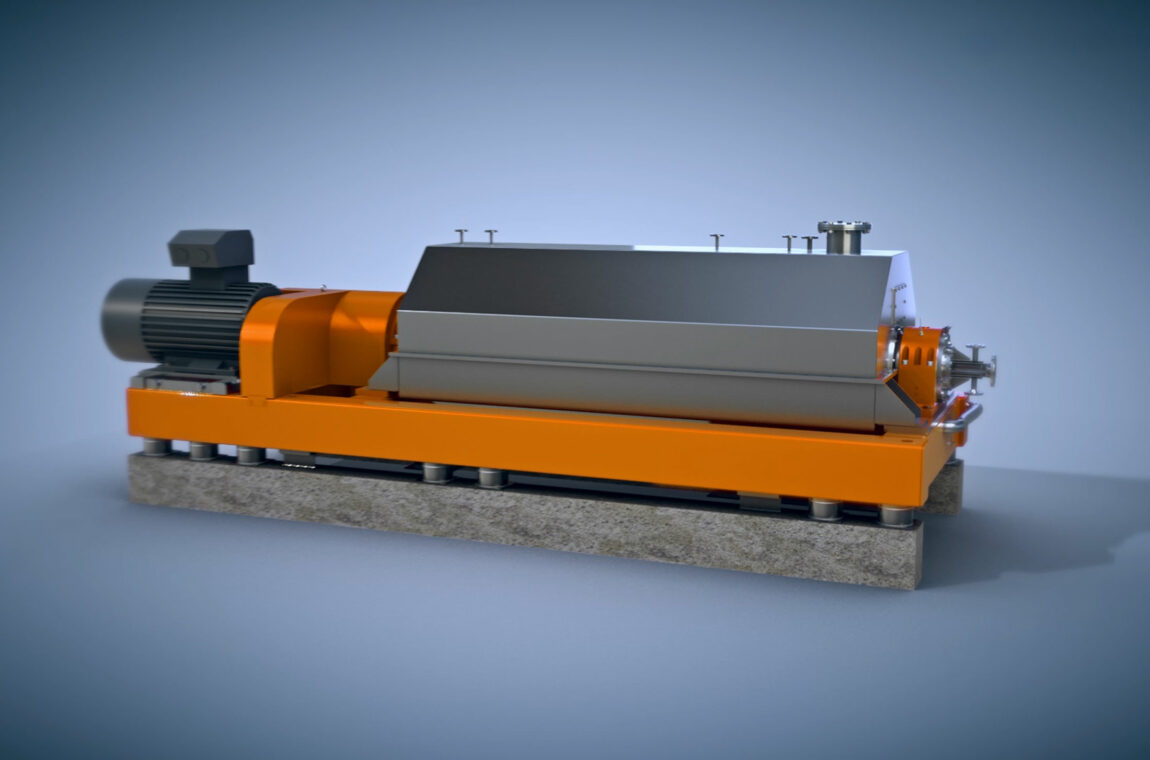
Los sólidos se separan y espesan mediante sedimentación en la camisa completa. A continuación, pasan al tambor de cribado. Tanto el diámetro como el diseño de la criba pueden adaptarse a las propiedades de los sólidos de cada aplicación específica.
Su diseño especial, que cuenta con un tambor de cribado de gran tamaño y rodamientos en ambos extremos, permite alcanzar elevadas fuerzas centrífugas y prolongados tiempos de retención. Gracias a ello, es posible separar eficazmente incluso aquellos sólidos que sedimentan con lentitud, para luego lavarlos y deshidratarlos hasta alcanzar su límite de deshidratación.
El líquido clarificado (centrado), el filtrado y los sólidos se evacúan a través de salidas independientes.
En la primera etapa del proceso, los sólidos se deshidratan previamente sobre el cono del tambor, en la sección de la centrífuga de cuenco macizo. El volumen de llenado del cuenco —y, por tanto, la longitud del recorrido de secado— puede ajustarse de manera continua mediante un disco vertedero. El líquido clarificado se evacúa a través de este disco.
Los sólidos previamente espesados se desplazan, a través de un borde de descarga, hacia un tambor de criba situado a continuación, el cual posee un tamaño considerablemente mayor. Aquí, en la segunda etapa, la torta de sólidos se fragmenta y se redistribuye formando una capa de menor espesor, aprovechando el mayor volumen disponible.
Al mismo tiempo, debido al gran diámetro, la torta de sólidos se somete a fuerzas centrífugas mucho más intensas, lo que facilita la eliminación del líquido residual.
Dado que, gracias a un buen espesamiento previo, llega relativamente poco líquido a la sección de criba, la cantidad de partículas finas que atraviesan el tambor de criba es mínima; además, al recircularse dentro de la centrífuga, no se consideran una pérdida.
El tambor de criba, de dimensiones generosas y con un bajo contenido de sólidos, resulta también especialmente adecuado para operaciones de lavado. El líquido de lavado se evacúa por separado del licor madre.
The name SIEBTECHNIK TEMA is inseparably connected with dewatering tasks under the highest hygienic requirements. The separation of breadcrumbs from frying oil at temperatures of approx. 200°C with the SHORTBOWL decanter centrifuge, the centrifugation of lactose crystals for the production of baby food with the SHORTBOWL decanter centrifuge and the CONTURBEX screen scroll centrifuge or the production of high-purity inorganic salts with our CONTURBEX and pusher centrifuges are just a few examples. Design features include technical separation of the drive and process areas of the centrifuge, advanced sealing systems that are easy to clean by CIP.
To optimize centrifuges for hygienic applications or in areas where CIP must prevent cross-contamination, we use riboflavin tests to verify and optimize cleaning results.
In-house developed and USDA-certified CIP nozzles, in-house developed hygienic fittings, special hygienic surfaces or our sophisticated USDA-compliant sealing technology make many dewatering tasks possible with our centrifuges.
The solution to a separation problem depends on the drive of the centrifuge. The centrifugal force required for solid-liquid separation is determined by the speed of the bowl or screen. To achieve the right speed for optimum separation results, it is often necessary to keep the speeds variable. Our specialists will customize the required drive control for your application.
In screen scroll centrifuges and decanters, the differential speed of the solids conveying screw to the bowl is also critical. It determines the residence time of the solids in the centrifuge and therefore the separation efficiency.
The correct differential speed for your separation task is determined by selecting the right gear. The differential speed can be constant or variable. In the latter case, the backdrive is used, where the otherwise fixed input shaft of the gear is also driven. If you want to keep the screw speed completely independent of the bowl speed, hydraulic drives (Viscotherm) or two-stage gearboxes with an upstream differential planetary stage are used.
The drive system is continuously monitored to ensure the operational safety of your centrifuge. Overspeed, overcurrent and slippage are detected and reported to the machine control system for action.


Inerting our machines and systems can be necessary for a variety of reasons. In many industrial processes, it is necessary for safety reasons to reliably prevent the formation of an explosive atmosphere caused by dust or gases (ATEX).
In addition, it may be necessary to seal and blanket product spaces with inert gas, such as nitrogen (N₂) or carbon dioxide (CO₂), to prevent oxidation and maintain product quality.
Take advantage of the decades of cross-industry experience of SIEBTECHNIK specialists in sealing and inerting the process chambers of your centrifuges.
We are happy to work with our customers to develop an inerting concept for the integration of our machines into existing or planned systems.
We offer energy optimization, machine monitoring, on-site maintenance & repair service, OEM spare parts, root cause analysis, maintenance & repair kits, inventory analysis, machine history management, personalized technical consulting, training & workshops, 24-hour service, retrofits & upgrades, and used & bridge machines.

Polyvinyl Chloride is a thermoplastic polymer also known as PVC. This versatile material is one of today's most important plastics, internationally recognized and proven in the market.
Estás viendo un contenido de marcador de posición de Predeterminado. Para acceder al contenido real, haz clic en el siguiente botón. Ten en cuenta que al hacerlo compartirás datos con terceros proveedores.
Más información


Soluciones integrales, todo de un solo proveedor, directamente del fabricante original.

La centrífuga decantadora con filtración CONTHICK es una máquina combinada que consta de un tambor de paredes sólidas en la zona de alimentación del producto y un tambor de filtrado aguas abajo.

Debido a la geometría especial de sus componentes giratorios, la centrífuga decantadora SHORTBOWL —de rotor macizo— resulta idónea para separar partículas sólidas finas que presentan una gran diferencia de densidad específica respecto a la fase líquida.


Tenemos la solución adecuada para cada tarea. Y, si no la tenemos, trabajaremos con usted para encontrar una. ¡Póngase en contacto con nosotros!
Nuestros especialistas estarán encantados de asesorarle de manera individual, in situ o a distancia, y están a su disposición para responder a cualquier pregunta que pueda tener. Envíenos un mensaje a través de nuestro
